Defense is More Than Just the Range: How I Beat Debt Collectors at Their Own Game

I am a very private person, and it’s honestly tough for me to speak publicly about my personal business. But lately, I’ve had people telling me they can’t afford ammunition or training because of financial problems mainly debt collectors. I told them the same thing I will share here. It got me thinking: Defense isn’t just about what we do at the range. It’s about protecting your home and your peace of mind from any threat, and that includes corporate bullies.
A couple of years ago, I had to deal with some medical issues that kept me from working. I was living off credit cards just to get by, and eventually, I had to choose between keeping a roof over my head or paying a credit card bill. For me, that was an easy choice, but it meant I ended up in default.
Fast forward to just the past few months. I found myself in federal civil court dealing with a financial giant on a separate issue. I spent a lot of money on that fight, which felt like a waste at the time, but it gave me a massive education on contract law. So, when I finally got sued in small claims court by a third-party debt collector, I wasn't intimidated. After dealing with the federal courts, local court felt like a walk in the park.
I don’t mean that as an insult to the local court system; they are simply more forgiving when it comes to people representing themselves than the federal courts are. If you find yourself in federal court, know they expect you to know just as much as an experienced lawyer.
The Strategy: Mandatory Arbitration
I started digging into the user agreements for my cards and found a clause that changes everything: Mandatory Arbitration. Most credit card agreements say you can claim arbitration up until the moment a trial begins. Just a heads up that Capital One and Bank of America generally do not have these clauses in their agreements as of this writing.
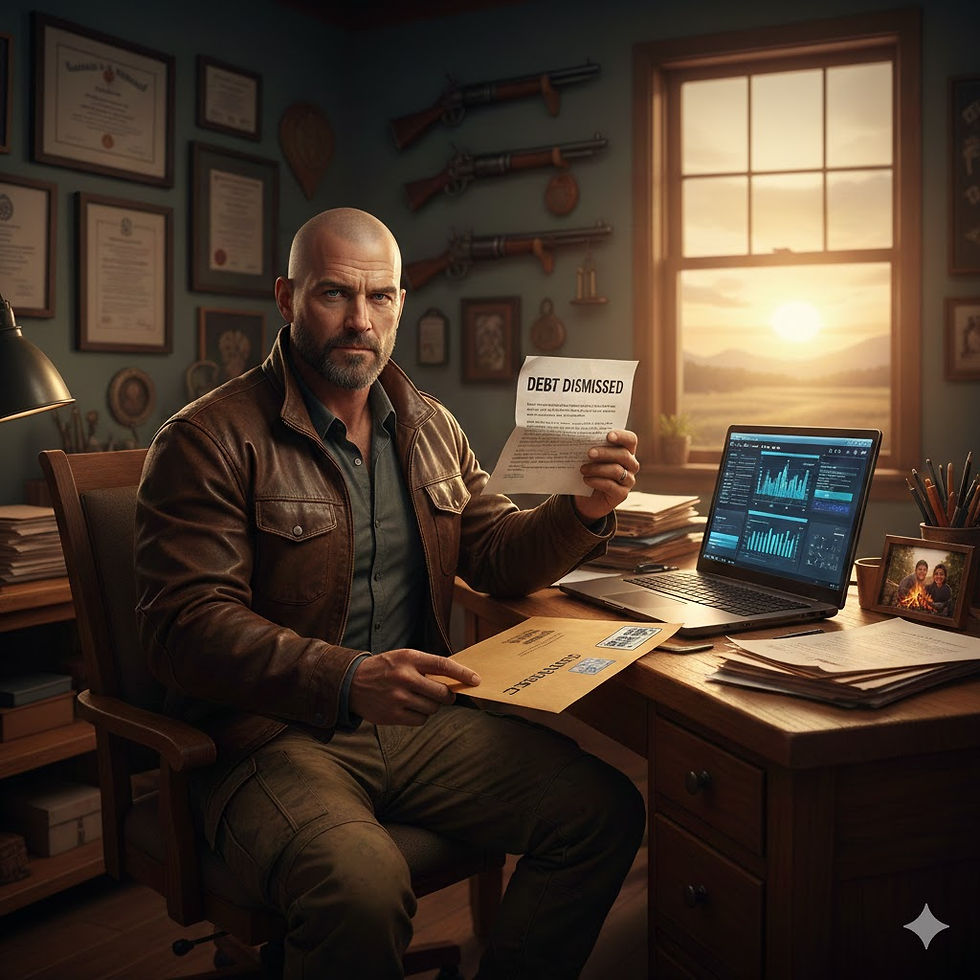
Here is the key: When a bank sells your debt, they are also selling the user agreement. The 3rd party debt collector is legally bound to that agreement. I wrote a "Motion to Compel Arbitration," and the judge agreed the case was put on hold. It really is a nice feeling when someone who spent over $200,000 on a law degree loses to someone with a high school education. And if the debt collector does not initiate arbitration within two months, you can file a Motion to Dismiss for Abandonment or Lack of Prosecution.
Why This Works
I decided to test this with my other cards in collections, too. I used Google Gemini to read the long user agreements and find the specific arbitration sections, then had it write a demand letter for me. It worked with almost no corrections on my part.
This works because of simple economics. Third-party debt collectors buy your debt for pennies on the dollar usually 4 to 7 cents. If you owe $8,000, they likely bought it for a few hundred bucks. When you demand arbitration, you force them into a private process that costs them thousands in filing fees just to show up. They aren't going to spend $3,000 to $5,000 to collect a debt they bought for $400.
Shortly after I sent my letters via Certified Mail, I started getting notices back saying they were dismissing the debt and wiping it off my credit report. The shortest response time I saw was around 15 minutes. I had sent that one through email and was actually in the process of filling out the Certified Mail slip when I got the notification that they were folding.
How You Can Do It
It was an extremely simple process. If you’re in this spot, don’t let these people intimidate you. You don’t need a high-priced lawyer or a credit repair company. First, find your original agreement online. Second, use AI to help you draft the demand letter based on the arbitration clause. Third, send it Certified Mail.
Just keep in mind: if a judgment is already against you, this won't help you. This is for when you're in collections or actively being sued.
I’m sharing this because I am all for the individual and small businesses, not big corporations who just see you as a number. If this helps you live stress free and get through a stressful time, then I've done what I aimed to do. We all hit rough patches, but defense is about knowing your rights and standing your ground. If you have questions, leave them in the comments and I’ll do my best to answer.
(Disclaimer: I am not an attorney. This is not legal advice. I'm sharing my personal experience and research for helpful purposes only.)
The "Why" For Those Who Want To Know
You might be asking yourself why any bank would put an arbitration clause in their agreement to begin with. The answer is actually pretty cynical: They didn't put it there to help you; they put it there to stop "Class Action" lawsuits.
Back in the day, if a bank overcharged millions of people by $5 each, a lawyer could sue them on behalf of everyone at once. Those lawsuits cost banks hundreds of millions of dollars. To stop that, banks started putting arbitration clauses in their contracts. It forces every customer to fight individually in a private room instead of joining together in a massive court case.
It was designed to protect the bank from the "big" threat, but it created a massive loophole for the individual. First, the fees are front-loaded. In court, it’s cheap for a bank to sue you. In arbitration, the company is required to pay the bulk of the arbitrator's fees up front. They are essentially forced to pay $3,000+ just for the privilege of arguing with you.
Second, debt buyers are lazy. The original bank might be willing to pay those fees, but a third-party debt collector is a different animal. Their entire business model is based on 90% of people not showing up to court so they get an easy default judgment. When you demand arbitration, you destroy their profit margin. If they bought your $2,000 debt for $100, but it costs them $3,000 to fight you in arbitration, they are now deep in the hole even if they win. They would rather just walk away.
Essentially, they built a wall to keep out a massive army, but they left a door open that a single person can walk through to shut them down.
The stress of the tactics they have used on people should be criminal they have had people take their own lives.
If you get these drafts from the AI, just make sure to double check then triple check that your account number, the court case number, and the company names are filled in correctly. Then, print them out and head to the post office for that certified mail sticker.
National Suicide Prevention Lifeline: Call or text 988
Crisis Text Line: Text HOME to 741741
The Consumer Financial Protection Bureau (CFPB): Provides resources for dealing with debt collectors at consumerfinance.gov


Comments